
VASER liposuction in Turkey uses ultrasound energy to help break up selected fat beneath the skin before it is removed by suction. It is a surgical body-contouring technique. The aim is to change shape in suitable areas, rather than treat obesity or promise a particular amount of weight loss.
Published examples checked on 30 October 2026 include Dr Semih Yıldız’s advertised starting fee of €1,400 for one area and €3,700 for high-definition VASER treatment. Another provider, Turk Aesthetic, describes a €450 VASER supplement to a €2,450 base-area fee. These are independent providers’ figures, not Sevclinic quotations or a national average.
The useful question is what the technique would add to your own plan. Ask which areas will be treated, how skin quality affects the likely result and why the surgeon recommends ultrasound assistance. The technology name cannot establish your suitability, the quality of the result or how quickly you will recover.

On this page
What is VASER, and how does it work?. VASER, traditional liposuction, Lipo 360 and HD: different terms. Is VASER better than traditional liposuction?. Which areas can be assessed for treatment?. Who may be suitable, and who needs further assessment?. Will VASER tighten loose skin?. VASER liposuction in Turkey prices: published examples. What should the written package include?. Choosing a surgeon for VASER liposuction in Turkey. Consultation, consent and device claims. Preparing before surgery. What happens during the operation?. Safety, burns and other complications. Recovery after VASER liposuction in Turkey. How long should you stay in Turkey before flying?. Can the removed fat be used elsewhere?. Results, before-and-after photographs and revision. Aftercare, insurance and financial protection. Frequently asked questions. Discuss a personal plan with Sevclinic.
What is VASER, and how does it work?
VASER is a branded ultrasound-assisted liposuction system. The initials refer to vibration amplification of sound energy at resonance. A probe delivers ultrasound energy within the treatment area; a separate suction step removes the prepared fatty tissue through a cannula.
A typical discussion of VASER liposuction in Turkey should explain both steps. Ultrasound assistance does not make the treatment external or incision-free. It still involves access openings, anaesthesia, tissue manipulation and postoperative care. The operative extent matters as much as the equipment used.
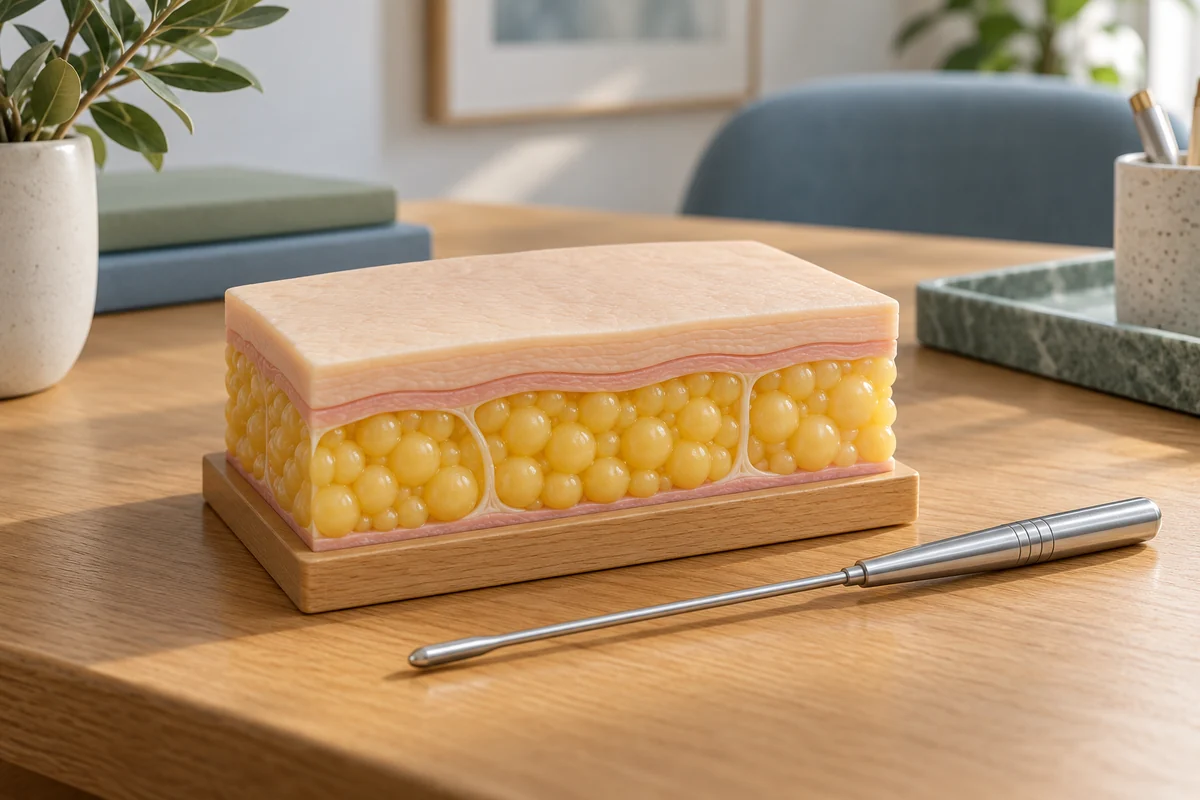
Fluid is commonly introduced into the planned areas before suction. Your clinician should explain the anaesthesia and fluid-management plan without assuming that all VASER operations follow the same protocol. The number of regions, their size and other procedures can change what is appropriate.
For the wider comparison of techniques and treatment goals, our guide to liposuction for localised fat provides the main overview. This page focuses on the decisions that arise when ultrasound assistance is proposed.
VASER, traditional liposuction, Lipo 360 and HD: different terms
When researching VASER liposuction in Turkey, you may see a technology, a treatment pattern and an aesthetic goal used in the same sentence. They answer different questions. Clarifying them makes quotations and consultations much easier to compare.
| Term | What it describes | What it does not establish |
|---|---|---|
| Suction-assisted liposuction | Fat removal with a suction cannula | The precise areas, amount removed or result |
| VASER / ultrasound-assisted liposuction | Ultrasound assistance before extraction | Guaranteed superiority, no pain or no downtime |
| Power-assisted liposuction | A powered cannula movement assisting removal | A fixed operation or recovery timetable |
| Laser-assisted treatment | A different energy-based approach | That it is identical to ultrasound assistance |
| Lipo 360 | A circumferential treatment pattern around the torso | Which device or exact regions are included |
| High-definition / HD sculpting | A plan to emphasise selected anatomical contours | That everyone can obtain an athletic-looking result |
A circumferential plan may use VASER, while a smaller VASER operation may treat only one region. Ask the surgeon to mark the intended areas and define them in writing. Our guide to circumferential torso liposuction addresses the scope of a 360 plan separately.
High-definition work is also a separate decision. It aims to change how underlying contours appear through the overlying tissues. Skin, fat distribution and your existing anatomy limit the effect. The abdominal etching and six-pack surgery guide examines that goal in more detail.
Is VASER better than traditional liposuction?
There is no single best technique for every person and region. The surgeon should connect the proposed benefit to your anatomy and goals. Ask whether the expected difference is meaningful to you, rather than accepting a general claim that newer equipment always produces a better result.
A 2012 randomised comparison by Nagy and Vanek treated opposite sides of the body with different techniques in 20 women. It reported improved measured skin retraction and reduced blood content in aspirate on the VASER-treated side. At six months, subjective measures including pain, swelling, appearance and preference did not differ statistically.
The published comparative trial provides useful evidence, but it was small and involved selected patients. It does not establish that everyone will have less pain, faster recovery or a better visible result. A percentage from a measured endpoint should not be presented as a guaranteed percentage improvement in your body.
For VASER liposuction in Turkey, ask what the operating surgeon expects ultrasound assistance to add in your specific regions. Experience with planning, tissue handling and aftercare remains important. Ask what alternative the surgeon would recommend if you chose not to use VASER.
Which areas can be assessed for treatment?

Common liposuction discussions include the abdomen, flanks, back, thighs, upper arms and selected areas beneath the chin. These are not interchangeable operations. A small chin procedure and extensive torso contouring involve different anatomy, anaesthesia considerations and recovery demands.
The main target is subcutaneous fat, which lies beneath the skin. Liposuction does not remove fat within the abdominal cavity around internal organs. A rounded abdomen can have more than one cause, so an online photograph cannot establish what contouring would achieve.
A plan for VASER liposuction in Turkey should specify each region rather than use “full body” as a substitute for detail. Ask how paired areas are counted and whether the lower back, upper back or bra-line region is included. Different area definitions can produce misleading price comparisons.
Chest contouring and gynecomastia
Male chest enlargement can involve glandular tissue as well as fat. Fat removal alone may not address the whole problem. New symptoms or a lump need appropriate assessment before a cosmetic plan. Our guide to male breast reduction explains why the diagnosis and operative scope matter.
Revision areas and earlier liposuction
Tell the surgeon about prior treatment, scars and any persistent numbness or irregularities. Revision planning begins with tissues that have already been altered. Ask what the proposed operation can improve and what new risks or limitations arise from earlier surgery.
Who may be suitable, and who needs further assessment?
Suitability for VASER liposuction in Turkey depends on health, fat distribution, skin quality and realistic expectations. A stable weight and a clearly defined contour concern are useful starting points. The clinician must also assess whether the potential benefit justifies the operative and anaesthetic risks.
Report diabetes, cardiovascular or respiratory disease, clotting problems and circulation concerns. The manufacturer’s safety information highlights chronic medical conditions and factors that may affect suitability. Do not assume that a familiar condition is irrelevant or that a short operation avoids the need for assessment.
Tell the team about nicotine use, all medicines and supplements, previous anaesthetic problems and any history of blood clots. An individual risk assessment is more useful than a website’s universal BMI cut-off. Some findings may lead to postponement, a smaller plan or advice against surgery.
Pregnancy, possible pregnancy, recent major weight changes or an ongoing weight-loss plan also belong in the conversation. If you use weight-loss medication, discuss the treatment with the surgeon, anaesthetist and usual prescriber. Do not change a prescribed medicine on the basis of a general online timetable.
If skin laxity is part of a broader concern, our comparison of body-reshaping options helps distinguish fat removal from skin excision. The most appropriate plan may involve a different procedure rather than adding more liposuction areas.
Will VASER tighten loose skin?
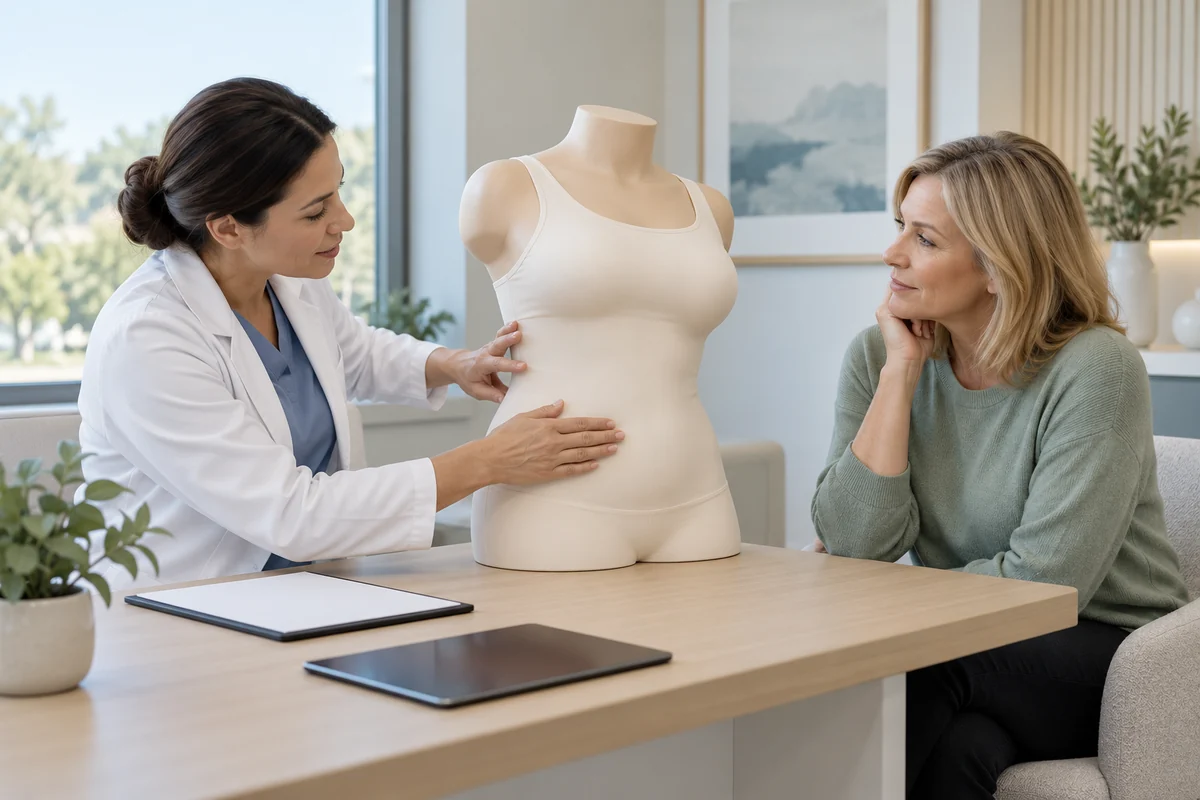
Skin quality affects how the treated area settles. Evidence of skin retraction in selected patients does not mean that VASER can reliably replace excision of substantial excess skin. Ask what degree of laxity would remain after the proposed operation.
With VASER liposuction in Turkey, an attractive promise of “skin tightening” needs a precise explanation. Does the surgeon mean expected retraction after fat removal, a separate energy-based treatment or an actual skin-removal procedure? Each has a different scope, risk discussion and price.
Substantial loose abdominal skin may lead to a discussion of abdominoplasty and abdominal skin removal. Similarly, a hanging upper-arm skin fold may require an arm lift rather than fat removal alone. A smaller access scar is not an advantage if the operation cannot address the concern.
Do not assume that an additional radiofrequency, plasma or other tightening treatment is part of VASER. Request the exact device and intended use, the evidence for your situation and the added risks. A separate intervention requires its own informed choice.
VASER liposuction in Turkey prices: published examples
The cost of VASER liposuction in Turkey depends on the regions, their size, the sculpting goal, anaesthesia and facility arrangements. These examples were checked on 30 October 2026. They are not directly interchangeable packages or personal Sevclinic estimates.

| Provider and advertised scope | Published figure | How to interpret it |
|---|---|---|
| Dr Semih Yıldız practice: one VASER area | From €1,400 | Starting clinical price; confirm the size and definition of the area |
| Same practice: each additional VASER area | From €1,230 | Published additional-area starting fee, not an unlimited-area package |
| Same practice: high-definition VASER | From €3,700 | Starting figure for a sculpting plan requiring individual assessment |
| Turk Aesthetic: VASER option on its stated base-area fee | €2,450 + €450 supplement | The page’s stated components total €2,900; confirm current scope and inclusions |
Dr Yıldız’s page describes hospital fees, anaesthesia, follow-up, medicines and required garments as included; hotel and transfers are additional. Turk Aesthetic’s VASER supplement is stated on its liposuction page, but the quotation still needs to confirm the full clinical and travel scope. Do not assume a hotel stay from the fee alone.
These prices do not establish a national minimum or maximum. A small defined area, several regions and a high-definition plan can involve different work. Ask what may change the fee after examination and what happens if you decide not to accept a revised proposal.
Does VASER always cost more?
A provider may charge a separate technology supplement, include it in the operation fee or propose another technique. Compare the whole plan rather than the supplement alone. The important question is whether the expected benefit justifies the total cost and risks in your case.
For example, a cheaper “two-area” quote may use narrower boundaries than another practice’s single torso region. Ask both teams to describe the same boundaries before comparing totals. No calculation can make unlike treatment scopes equivalent.
What should the written package include?
A package for VASER liposuction in Turkey should separate the operation from travel services. Accommodation and transfers can be convenient, but they do not establish clinical support. Ask who will examine you, who responds overnight and how an urgent problem is managed.
| Item | What needs a clear answer |
|---|---|
| Operation | Named surgeon, exact regions, technique and whether another intervention is added |
| Anaesthesia and hospital | Who provides care, facility address, observation plan and extra-night fees |
| Tests and aftercare supplies | Which tests, medicines, dressings and garments are included |
| Hotel and transport | Dates, room arrangements, companion costs and covered routes |
| Follow-up | In-person reviews before departure and arrangements after returning home |
| Complications and revision | Who pays for local treatment, hospital charges, extra travel and accommodation |
| Cancellation or medical postponement | Deposit, refund and revised-quotation terms |
Budget separately for flights, time off work, help at home and a reserve for delays. If you compare treatment abroad with treatment at home, match the operative scope and aftercare access. A headline percentage saving is not a substitute for that comparison.
Choosing a surgeon for VASER liposuction in Turkey
Searching for the best surgeon for VASER liposuction in Turkey should lead to a verifiable shortlist. Check specialist training and current operating arrangements, then ask about experience with the exact regions and sculpting goal you have. A device certificate alone cannot establish overall surgical competence.
Examples of professional records to verify
Dr Semih Yıldız: his practice publishes VASER-specific procedure information and starting fees. A Turkish Society of Plastic Reconstructive and Aesthetic Surgeons announcement lists his name among successful candidates in the April 2023 EBOPRAS oral examination. This supports a particular historical qualification check, rather than proving current privileges or your likely outcome.
Dr Leyla Arvas: the Turkish professional society has a doctor-directory entry under her name, and ASPS also publishes a professional profile. Her own practice describes VASER treatment. These records offer starting points for checking identity and professional background. Ask separately about the current hospital, anaesthesia arrangements and relevant operative experience.
These examples are not a ranking or a claim of Sevclinic affiliation. For any surgeon, confirm who will actually operate and what happens if that person becomes unavailable. Ask for comparable cases with a clear follow-up interval, rather than relying on selected social-media images.
Our guide to arranging cosmetic surgery in Turkey explains the wider selection process. For ultrasound-assisted liposuction, add questions about thermal injury, contour irregularity and what the team does when skin retraction is inadequate.
Verify the actual operating facility
The Turkish Ministry of Health publishes authorised healthcare-facility lists for international health tourism. Match the facility’s legal name and address to the relevant category. A booking company, consultation office and surgical hospital may be separate organisations.
Ask who manages anaesthesia, what observation is planned and how higher-level care would be accessed if needed. A current facility check and a surgeon check address different parts of the decision. Neither is a guarantee that complications cannot occur.
Consultation, consent and device claims
A consultation should review your health and earlier procedures, examine the proposed regions and discuss alternatives. The surgeon should explain the likely change, limitations, access scars and risks. You should have time to decide without pressure from a travel date or a temporary offer.
Before consenting to VASER liposuction in Turkey, ask whether the operation includes only fat removal or also skin excision, tightening or fat transfer. Find out what happens if the in-person assessment differs from the initial photograph-based plan. A coordinator can organise the journey, but the clinical explanation belongs with the treating team.
Be precise about regulatory language. An FDA record for the VASER 2.1 system documents a 510(k) substantial-equivalence determination for specified uses. It does not certify a particular surgeon or clinic, approve an entire travel package or guarantee that every proposed use is appropriate for you.
Video: how the ultrasound-assisted process works
“How VASER Lipo Works” illustrates the process. Publisher: @soundsurgical. This is a device-industry educational demonstration, not an independent comparison or a prediction of your result. Discuss the explanation and any promotional claims with your surgeon.
Preparing before surgery
Preparation for VASER liposuction in Turkey needs an individual plan for medicines, nicotine, tests, fasting and recovery support. Share a complete medication list, including supplements and weight-loss treatment. Ask which changes require agreement with your usual prescriber.
Do not stop a prescribed blood thinner, hormone treatment or diabetes medicine on your own. If an illness needs further assessment, resolve the plan before travel. Remote enquiries are useful, but they cannot replace every examination or anaesthetic assessment.
Arrange practical help, easy clothing and flexible travel plans. Describe your job and exercise routine during planning. Recovering from several regions while travelling alone can be more difficult than a short procedure description suggests.
What happens during the operation?
The team confirms the regions and planned technique before surgery. Anaesthesia can vary with the operation and clinical setting. Ask whether local anaesthesia, sedation or general anaesthesia is proposed and why. Being awake does not remove the need for monitoring or make a procedure risk-free.
After preparation and fluid infiltration, the surgeon uses ultrasound assistance where indicated and removes fat with suction. The access openings are managed according to the operative plan. Dressings and a compression garment may be applied afterward.
Ask how the amount removed will be planned and measured. A promised number of litres should not be treated as a weight-loss target. The surgeon must consider the overall procedure, fluid balance, anaesthesia and observation needs. More extraction is not automatically a better or safer contouring result.
Safety, burns and other complications
VASER liposuction in Turkey carries the risks of surgery and anaesthesia, together with concerns associated with ultrasound-assisted treatment. Possible problems include bleeding, infection, fluid collections, persistent sensation changes, contour irregularities and an unsatisfactory result. Further treatment may be needed.
Thermal burns or heat injury are specifically listed by ASPS for ultrasound-assisted lipoplasty. Deeper structures can also be injured during liposuction. The surgeon should explain how these risks are considered in your proposed treatment rather than describing the technique as harmless because it targets fat.
The ASPS liposuction safety guidance is a useful starting point for this discussion. Ask how the team limits thermal injury, plans the operative extent and recognises complications. No brand or technique removes all risk.
When to seek help urgently
Seek emergency medical care for sudden breathlessness, chest pain, collapse or severe unexplained deterioration. New one-sided limb pain or swelling needs urgent assessment for a possible clot. Do not wait for a distant coordinator to reply before seeking appropriate local care.
Contact the clinical team promptly about increasing redness, fever, worsening drainage, a wound opening, blistering or unexpectedly increasing pain. A suspected burn or rapidly worsening swelling needs assessment. Report symptoms rather than trying to correct them with extra pressure or aggressive massage.
Recovery after VASER liposuction in Turkey
Recovery after VASER liposuction in Turkey depends on the regions, operative extent, other procedures and your healing. Bruising, swelling and soreness can occur. An early change in contour does not mean the tissues have finished settling or that normal exercise is safe.

| Stage | Planning focus | What requires individual advice |
|---|---|---|
| First days | Rest, prescribed medication, wound checks and practical support | Pain control, dressings, garment fit and safe mobilisation |
| First 1–2 weeks | Local reviews and gradual light activity | Work duties, driving, travel and any remaining care needs |
| Following weeks | Gradual return to routine and exercise | Lifting, strenuous training, swimming and garment duration |
| Following months | Settling of swelling and review of contour | Persistent lumps, skin concerns, asymmetry or possible revision |
This is a framework for planning, not a clearance schedule. A small region and extensive torso sculpting can have different recoveries. Ask when you can perform your actual tasks, including carrying children, standing at work or lifting equipment, rather than asking only when you will feel normal.
Compression garments, swelling and massage
If prescribed, the garment should match the treated regions and fit as directed. Ask how long to wear it, how to clean it and when it can be removed. More pressure is not automatically helpful. Report concerning pain, numbness, colour changes or swelling for assessment.
Early unevenness or firmness may change as healing progresses, but a persistent or worsening concern needs review. Ask whether massage is recommended, when it may start and who should provide it. Do not assume that every lump needs forceful treatment or that massage can correct every contour problem.
Walking, work and exercise

Discuss gentle mobilisation with the team and avoid prolonged immobility where possible within your instructions. Exercise progression should account for wounds, discomfort and any combined operation. A return to desk duties is different from a return to demanding gym sessions.
How long should you stay in Turkey before flying?
Travel after VASER liposuction in Turkey needs to be planned around clinical review, your recovery and the journey. The NHS advises avoiding flying for 5–7 days after procedures such as liposuction. That is general guidance rather than a personal departure date.
Surgery and air travel can both increase clot risk. A longer stay may be needed depending on the operative extent, other procedures, complications and your individual risk. If abdominal surgery is combined, different travel guidance may apply. Keep accommodation and tickets flexible enough to follow medical advice.
Ask about airport assistance, luggage and any airline documentation. Know how to access care during the journey and after returning home. The package’s last hotel night does not establish fitness to fly.
Can the removed fat be used elsewhere?
Selected patients may discuss fat grafting alongside liposuction. This adds a recipient-area operation with its own risks and recovery. The amount harvested does not equal the amount suitable for transfer, and retained volume cannot be guaranteed.
Our guide to transferring your own fat explains the broader choices. If buttock augmentation is proposed, consult the BBL safety and recovery guide. The safety of injection is a separate issue from how the donor fat was collected.
Adding a skin-removal operation also changes the overall plan. Ask whether combining procedures is appropriate or whether staging would make recovery more manageable. The aim should be a defensible clinical plan, rather than maximising the number of procedures in one trip.
Results, before-and-after photographs and revision
Results from VASER liposuction in Turkey should be reviewed as swelling settles. Stable weight supports durability, but remaining fat and other tissues can change with weight, ageing and pregnancy. The operation cannot guarantee that an area will never change again.
Compare photographs with similar starting anatomy, consistent posture and lighting, and a clear time since surgery. Athletic poses and selected shadows can change the apparent definition. Ask to see the contour at rest as well as in promotional views.
Access openings leave scars, even when they are small. Skin irregularity, residual laxity or asymmetry may remain. Discuss when the surgeon will assess persistent concerns and whether revision could help. A further operation has its own risks and may not achieve the exact appearance you hoped for.
Aftercare, insurance and financial protection
Before departure, request a surgical summary, medication list, care instructions and follow-up contacts. Know who will examine you locally if necessary. Remote photographs can assist communication, but they cannot answer every question about a wound, a possible burn or a suspected fluid collection.
Check insurance specifically for planned elective surgery abroad and complications. Ordinary travel cover may exclude them. Ask about emergency care, additional accommodation and evacuation where relevant. Keep the written answer along with consent and payment records.
A revision policy should distinguish professional fees from hospital, anaesthesia, travel and other charges. Ask what is covered, what conditions apply and how a complaint is handled. Seek needed care promptly rather than allowing a financial discussion to delay treatment.
Frequently asked questions
How much does VASER liposuction cost in Turkey?
Published examples checked on 30 October 2026 include Dr Semih Yıldız’s starting €1,400 single-area fee and €3,700 high-definition fee. Turk Aesthetic lists a €450 VASER supplement to its stated €2,450 base-area fee. Exact areas and inclusions require a current personal quotation.
Is VASER the same as Lipo 360?
No. VASER describes ultrasound-assisted technology. Lipo 360 describes circumferential torso treatment. A 360 plan may use VASER, but neither term defines all the regions, anaesthesia or aftercare without a written operation plan.
Is VASER laser liposuction?
No. VASER uses ultrasound energy, while laser-assisted treatment uses a different energy source. Ask which device and technique are proposed and why they suit your plan. Similar marketing terms do not make the procedures identical.
Will VASER help me lose weight?
It is intended for selected body-contour changes rather than obesity treatment or significant weight loss. Discuss weight goals and health separately. A promised extraction volume should not determine which operation you choose.
Does it remove visceral belly fat?
No. The target is fat beneath the skin, not fat inside the abdominal cavity around organs. A rounded abdomen can have several causes, and examination is needed to judge what contouring might achieve.
Will it tighten all my loose skin?
No. Skin retraction varies and cannot reliably replace removal of substantial excess skin. Ask what laxity would remain and whether another procedure is appropriate. Any additional tightening treatment needs a separate explanation of risks and limits.
Is VASER always better than traditional liposuction?
No universal superiority can be promised. A small comparative trial found differences in certain measured endpoints but not all subjective outcomes. The choice should depend on anatomy, goals, the proposed benefit and the surgeon’s assessment.
Is VASER painless or free of burns?
No. Discomfort and swelling can occur, and ultrasound-assisted treatment carries a thermal-injury risk. Anaesthesia and aftercare aim to manage the procedure safely, but they do not remove all pain or complications.
Will I need general anaesthesia?
It depends on the regions, operative extent and clinical setting. Local anaesthesia, sedation or general anaesthesia may be discussed. Ask who provides monitoring and what observation is planned afterward. An awake procedure is not automatically safer.
How long do I wear compression garments?
The type and duration should be prescribed for your operation and healing. Ask about fit, removal, cleaning and symptoms that need review. Do not make the garment tighter or add pressure devices without clinical advice.
When can I fly home?
The treating team should assess recovery, travel duration and individual risk. NHS advice suggests avoiding flights for 5–7 days after procedures such as liposuction, but you may need longer. A package departure date is not medical clearance.
Can the fat be used for a BBL?
Fat transfer may be discussed in selected patients, but buttock injection has separate safety considerations. A suitable harvesting technique does not establish that the whole combined operation is appropriate. Ask about recipient-area risks and recovery.
Can men and women have VASER contouring?
Both may be assessed. Anatomy, health, skin quality and individual goals determine the plan. A package label or gender-based image cannot establish suitability or guarantee a particular muscle definition.
What happens if I develop a problem at home?
Seek prompt local clinical assessment when needed and share your operation records. Contact the treating team as well, but do not delay urgent care while waiting for a remote reply. Establish follow-up contacts and financial arrangements before travel.
Discuss a personal plan with Sevclinic
If you are considering VASER liposuction in Turkey, start with the regions that concern you, your weight history and the recovery time you can realistically allow. Ask Sevclinic about current availability, the named surgeon and hospital, and an itemised quotation after assessment.
You should understand the expected benefit of ultrasound assistance, alternative options, risks and aftercare before committing. A clear discussion should leave you comfortable proceeding, seeking another opinion or choosing to wait.