
Breast fat transfer in Turkey uses fat collected from your own body to add selected breast volume or improve contour. Surgeons also call it breast lipofilling, lipomodelling or autologous fat grafting. It may suit someone seeking a modest change without a breast implant.
The decision depends on more than having unwanted fat available. Your breast tissues must be suitable for the planned graft, and the donor sites need assessment too. The amount placed during surgery is not the same as the amount that will remain after healing.

On this page
What does breast fat transfer in Turkey involve?. How much bigger can the breasts realistically become?. Who may be a suitable candidate?. Donor sites: harvesting versus body contouring. Fat transfer, implants, a lift or a hybrid procedure?. Breast fat transfer in Turkey: prices and package scope. How to assess surgeons and clinics. Consultation, consent and preparation. What happens during breast lipofilling?. External expansion, microfat and “stem cell” claims. Breast fat transfer in Turkey: risks and safety. Breast imaging, lumps and cancer-history questions. Recovery: donor-site support and breast care. Pregnancy, breastfeeding and combined post-pregnancy surgery. Retained fat, repeat sessions and long-term changes. Follow-up and assessing the result. Planning the stay in Turkey and travel home. Symptoms that need urgent medical attention. Choosing a plan that fits your goals. Frequently asked questions. Medical information and price check.
What does breast fat transfer in Turkey involve?
The procedure has three broad stages. Fat is collected from an agreed donor area using liposuction, prepared and transferred into the breasts. The aim may be a modest increase in fullness, correction of selected contour differences or additional coverage as part of another breast operation.
Planning breast fat transfer in Turkey should identify the breast treatment and the harvest separately. A small graft to improve one contour is different from bilateral augmentation with several donor sites. Those differences affect the operation, the price and recovery.
Transferred fat needs a blood supply to survive. Some tissue is absorbed, and some may develop changes such as fat necrosis or oil cysts. Your surgeon should explain how your tissues influence the achievable result and why a further session might be considered.
Our broader guide to fat grafting and recipient-site differences explains the general process. Breast treatment adds particular questions about volume, breast health and future imaging.
How much bigger can the breasts realistically become?
Fat grafting is generally discussed for a relatively modest increase in volume. It can improve selected fullness and transitions, but it does not give every patient the same enlargement. Starting anatomy, available donor tissue, skin and the amount retained all matter.
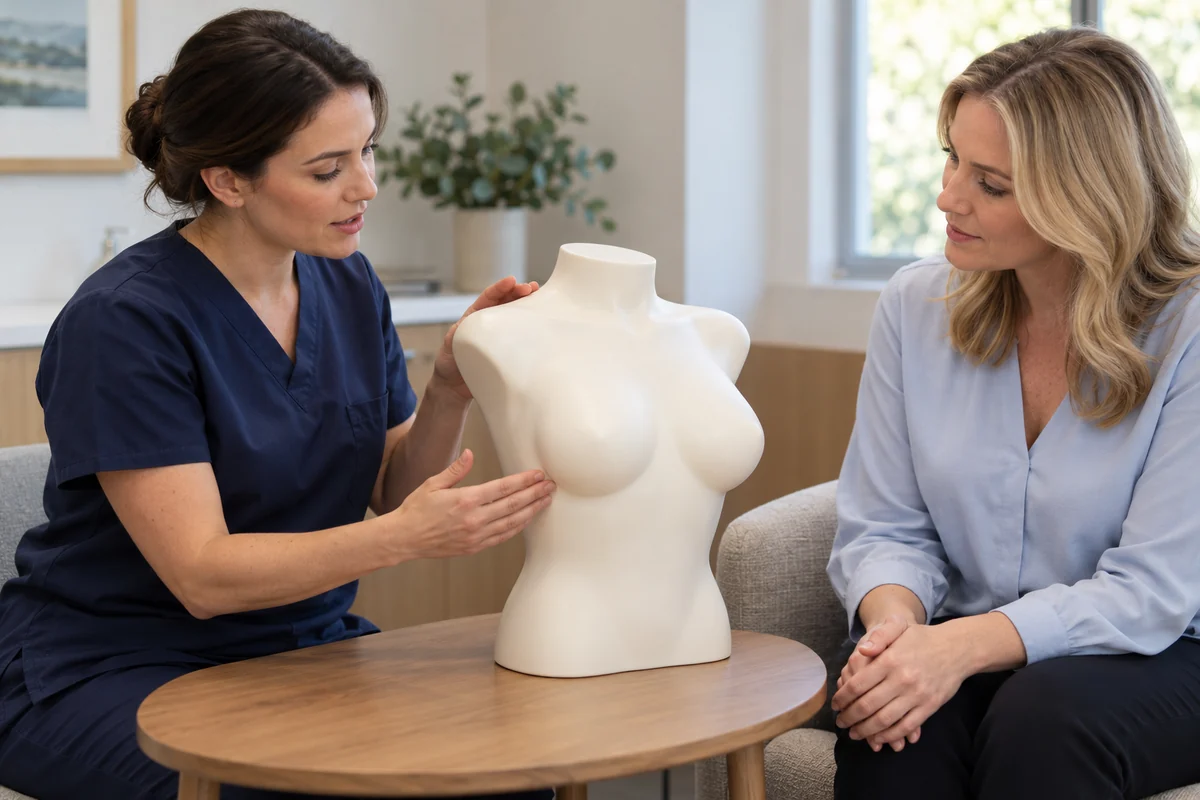
With breast fat transfer in Turkey, a promise of a guaranteed cup-size increase is a reason to ask more questions. Bra sizes are not standardised, and the same volume can look different on different chest widths. A photograph or simulator can support discussion, but cannot guarantee the result.
The surgeon should distinguish the amount harvested, the amount prepared, the amount transferred and the amount expected to remain. These are different measurements. A large harvest does not establish that the breasts can safely accept all of that tissue.
Ask to see comparable healed cases, including the time after treatment and whether more than one session was used. Describe your preferred fullness and proportions, rather than choosing a volume from someone else’s result.
Will it lift sagging breasts?
Adding volume does not remove excess skin or reliably reposition a descended nipple. If drooping is a major concern, a breast uplift using your existing tissue may address a different part of the problem. Combining lifting and grafting introduces its own planning and recovery considerations.
Fat also cannot guarantee close cleavage without a bra. Chest shape, breast position and the space between the breasts place limits on that goal. Ask what can change and what is likely to remain part of your natural anatomy.
Who may be a suitable candidate?
A suitable candidate generally has a defined volume or contour concern, enough appropriate donor fat, reasonably stable weight and realistic expectations. Good health and the ability to follow both-site aftercare are important. Preferring your own tissue does not automatically make grafting the best option.
Suitability for breast fat transfer in Turkey requires medical review and examination. Tell the surgeon about previous breast operations, implants, biopsies, radiotherapy, infections and any earlier fat transfer. Breast scars and tissue changes can influence the plan.
Provide a complete history of health conditions, nicotine use, medicines, supplements and allergies. Diabetes, bleeding or clotting problems and anaesthetic risks may need further assessment or optimisation. Some people should postpone surgery or consider another approach.
A new lump, unexplained nipple discharge, skin change or persistent breast pain needs assessment before elective treatment. Photographs used for a quotation do not replace a clinical examination or appropriate breast investigations.
Can slim patients have it?
Being slim does not settle the answer. The surgeon needs to find suitable donor tissue while considering the risk of an unwanted contour change at the harvest site. Some people have enough for a limited correction, while others may not have enough for the desired augmentation.
Do not deliberately gain weight just to meet a package’s harvesting target without discussing your health and goals. If your weight is changing significantly, waiting for a stable stage may make planning more useful. Mention any weight-management medicines to the surgical and anaesthetic teams.
Donor sites: harvesting versus body contouring
Fat may be collected from suitable areas of the abdomen, flanks, hips or thighs. The choice depends on your tissues, previous liposuction and the amount needed. Your surgeon should explain the proposed sites and whether a visible contour change is intended.

Breast fat transfer in Turkey does not automatically include extensive body-sculpting liposuction. Collecting enough tissue for grafting and treating a whole waist or several body regions are different scopes. If both are proposed, the treatment map and price should identify both.
Our guide to fat-removal surgery and donor-area contours explains the harvesting side of the decision. Small incisions still leave scars, and bruising, swelling, altered sensation or irregularity can occur where fat is taken.
Ask how previous liposuction or existing asymmetry affects the donor plan. Removing more fat simply because it is available is not, by itself, a sensible goal. A device brand also does not guarantee a particular survival rate after transfer.
Fat transfer, implants, a lift or a hybrid procedure?
These options serve different goals. Fat transfer adds selected volume with your own tissue. An implant adds device-based volume and projection. A lift reshapes and raises existing tissues. Sometimes procedures are combined, but the reason should be clear.
| Option | Main purpose | What to weigh up |
|---|---|---|
| Fat transfer alone | Modest fullness or selected contour improvement | Donor sites, variable retention, possible further sessions and imaging changes |
| Implants | A different range of added volume and projection | Device-related risks, monitoring and possible future surgery |
| Breast lift | Repositioning and reshaping of existing tissue | Permanent scars and a different recovery; no automatic added volume |
| Lift with selected fat grafting | Combine reshaping with limited added fullness | Suitability for combined surgery and the limits of each component |
| Implant with fat grafting | Selected additional soft-tissue contouring around an implant | Both device and graft-related care; not a way to eliminate implant risks |
When considering breast fat transfer in Turkey, ask whether the size and projection you want are realistically achievable with fat alone. If a larger or different change is important to you, compare the trade-offs of breast enlargement with implants.
A hybrid or composite augmentation combines an implant with fat grafting for selected shaping or coverage goals. It does not remove the need for implant records and future device care. The quote and consent should name both procedures.
If your main goal is a smaller or lighter breast, breast reduction and reshaping addresses a different concern from adding volume.
If you need lifting as well as substantial added fullness, the guide to combined breast lifting and implant surgery explains another option. The choice should follow your anatomy and preferences, rather than a package label.
What if you already have implants?
Bring the implant card, previous operation notes and imaging. The plan may involve retaining, exchanging or removing the devices, with separate assessment of the capsule and remaining breast tissue. Fat transfer cannot automatically replace the volume or shape of an implant in one session.
If removal is being considered, ask what skin looseness may remain and whether lifting or staging is needed. Capsule surgery is a separate decision. Do not assume that every removal requires the same procedure or that adding fat eliminates the risks of revision surgery.
Breast fat transfer in Turkey: prices and package scope
A published example for breast fat transfer in Turkey lists €4,000 at Ali Mezdeği’s practice for 2026. The page and displayed package were checked on 31 October 2026. This is one provider’s advertised example, not a national average, a personalised offer or a Sevclinic quotation.

| Published example or cost item | Figure or status | What the information establishes |
|---|---|---|
| Ali Mezdeği’s 2026 breast fat-transfer example | €4,000 advertised | Displayed package lists liposuction, breast transfer, anaesthesia and laboratory tests, postoperative checks, airport pickup, city transfers and interpreting support |
| Hospital arrangements, hotel and flights | Confirm in the personal quote | The procedure summary describes hospital care; obtain the exact charges and nights in writing. Accommodation and flights should not be assumed from a transfer service. |
| A later grafting session, lift or implant procedure | Separate defined plan and price | The displayed figure does not establish the cost or inclusion of every additional procedure or return trip |
The example appears on the practice’s breast fat-transfer page. Ask for a dated quotation after assessment. A reference to a “full package” needs a written breakdown, particularly for hospital nights, hotel accommodation and follow-up after you return home.
What changes the final cost?
The price of breast fat transfer in Turkey depends on the breast correction, donor sites, anaesthetic plan and facility. Asymmetry, previous surgery, a combined lift or a larger body-contouring operation can change the work involved. Preoperative imaging and additional investigations may also affect the total.
Check whether the quote covers both breasts and all agreed donor regions. Ask about prescribed garments, medication, review visits, extra hospital nights and treatment of a complication. An anaesthetic fee alone does not establish every hospital charge.
What would another session cost?
A planned second session can involve another harvest, anaesthesia, facility use and recovery period. It may also mean a second trip and more time away from work. Ask how the decision is made and which costs would apply before treating a headline fee as the complete budget.
Revision and complication terms also need detail. A waived surgeon’s fee does not necessarily cover theatre charges, tests, travel or accommodation. If insurance is offered, obtain the policy wording and exclusions rather than relying on a package description.
Comparing treatment in Turkey with care at home
Compare personalised plans for the same operation and follow-up responsibilities. A limited contour correction cannot be compared directly with extensive liposuction and bilateral grafting. Allow for flights, a companion, extra accommodation and local care, with a reserve for unexpected needs.
How to assess surgeons and clinics
Searches for the “best breast fat transfer surgeon” often return promotional rankings. A stronger starting point is the named surgeon’s specialist identity, relevant breast-grafting experience, current professional status and the hospital proposed for your operation.
Before breast fat transfer in Turkey, ask how the surgeon assesses the breast’s capacity for a graft, discusses retention and investigates postoperative lumps. Ask about comparable healed cases and whether the photographs show one session or several. Reviews and photographs cannot establish an audited complication rate.
Two examples with independently checkable records
Ali Mezdeği: the Turkish Society of Plastic, Reconstructive and Aesthetic Surgeons has an Istanbul directory entry under his name. His practice publishes a breast fat-transfer page and the price example above. Ask about the proposed breast and donor-site scope, imaging plan and access to clinical care after discharge.
Semih Yıldız: the society’s announcement of successful candidates in the 22 April 2023 EBOPRAS oral examination includes his name. His practice describes transfer of harvested fat to the breasts among selected combined options. Verify the current procedure offered, operating hospital and breast-specific follow-up for your own case.
These are research examples, not a ranking or a claim of affiliation with Sevclinic. A historical examination result or directory listing does not establish current hospital privileges or predict outcomes. Our guide to checking surgeons and facilities in Turkey provides broader questions for that assessment.
Consultation, consent and preparation
Bring a full medical history, medication and supplement list, allergies, previous breast reports and details of any operations. Discuss past anaesthetic problems and personal or family clotting history. Do not omit nicotine products or weight-management medication from the review.
Preparation for breast fat transfer in Turkey should include an individual plan for medicines, fasting, nicotine use and required tests. Your surgeon, anaesthetist and prescribing clinician should agree relevant changes. Do not stop prescriptions or start blood thinners based on an online checklist.
Ask whether breast imaging is needed before surgery according to your age, symptoms and risk history. Complete recommended investigations before proceeding. A photograph-based quote is a starting point for discussion, not confirmation of breast health or suitability.
Arrange a responsible adult for transport and early help. Donor-site soreness can make dressing, shopping or lifting luggage difficult. Plan childcare and physical work around recovery, and choose accommodation that makes attending reviews practical.
What happens during breast lipofilling?
The team checks your health information, consent and planned treatment areas. The surgeon confirms the breast goals and donor-site markings. You should understand any agreed alternatives before anaesthesia, including circumstances that would lead to postponement or a changed plan.
During breast fat transfer in Turkey, fat is collected through small donor-site openings, prepared and placed in the agreed breast regions. Preparation methods and the anaesthetic approach vary. The plan should take account of the tissues receiving the graft, rather than pursuing the largest possible volume.
Duration, hospital observation and discharge depend on the extent and any combined surgery. Some patients can leave after appropriate recovery and assessment, while others need longer monitoring. An advertised operation time or one-night stay is not a guarantee of your schedule.
Before discharge, obtain instructions for both sites, pain control, prescribed support, activity and follow-up. Ask what symptoms should trigger a call, an examination or emergency care. Make sure you can understand the instructions and have the contacts available.
A procedure explanation on video
Talking With Docs introduces the process and common questions in “How Does Breast Fat Transfer Work?” Credit: @TalkingWithDocs. It is a general educational explanation, not a description of a Turkish package or a substitute for your surgeon’s individual advice.
External expansion, microfat and “stem cell” claims
Some plans may include an external tissue-expansion system before grafting. If a device such as a BRAVA-type system is proposed, ask what it is intended to achieve, whether it is appropriate for your tissues and what time, cost and care it adds. It is not part of every fat-transfer operation.
Terms such as microfat describe aspects of preparation or graft size. They do not establish a guaranteed breast enlargement or survival rate. Ask the surgeon to explain the actual technique and the evidence for any claimed advantage.
“Stem cell breast augmentation” can mean different things in advertising. Clarify whether the proposal is standard fat grafting, an added cell preparation or another intervention. Ask about evidence, regulatory status and additional risks. A marketing label is not proof of an approved regenerative treatment.
Breast fat transfer in Turkey: risks and safety
Potential complications include infection, bleeding, asymmetry, contour irregularities and an unsatisfactory amount of retained volume. Fat necrosis, oil cysts and calcifications can develop. Further assessment or treatment may be needed for some of these changes.
There are also risks at the donor sites, including scars, altered sensation and uneven contours. Anaesthesia, blood clots and rare serious complications affecting circulation or deeper structures belong in the consent discussion. The overall plan matters, especially if other procedures are combined.
The American Society of Plastic Surgeons’ breast fat-grafting safety information lists cysts, infection, microcalcification and fat-cell necrosis among the possible problems. Using your own fat does not make the procedure risk-free.
Safety in breast fat transfer in Turkey depends on suitable selection, the operation, the facility and continuity of care. Ask whether a smaller correction, fewer combined procedures or separate stages would better fit your health and tissues. No brand or harvesting device can eliminate every risk.
Why the amount transferred needs limits
The breast has to support the transplanted tissue. Adding more is not a reliable way to compensate for every possible loss. The surgeon should explain what can be accommodated and why staging may be considered, rather than promising that an unlimited harvest can all be used.
Ask who will make clinical decisions after discharge and how complications are managed. A coordinator can organise communication, but cannot replace a physical examination, imaging or hospital treatment when those are needed.
Breast imaging, lumps and cancer-history questions
Before surgery, tell the team about previous imaging, biopsies, breast symptoms and family history. Appropriate investigations depend on your age and risk, not simply whether you are buying a cosmetic procedure. A new symptom should be assessed before elective travel.

After breast fat transfer in Turkey, fat necrosis or oil cysts can produce a lump, and calcifications may appear on imaging. These changes can be benign, but a new lump should not be assumed to be harmless grafted fat. Tell the imaging team about the operation and keep the procedure records.
Depending on the findings, assessment may involve examination, ultrasound, mammography or a biopsy. Your clinical team should decide what is needed. Do not delay investigation because a package includes only a later routine follow-up.
Does fat grafting cause breast cancer?
Fat necrosis and oil cysts are benign changes; they are not themselves cancer. Fat grafting has also been studied in selected breast-reconstruction settings. That evidence does not justify a blanket guarantee about every person’s cancer risk or remove the need for surveillance.
If you have had breast cancer, radiotherapy, a high-risk genetic result or a significant family history, involve the breast team before considering treatment. Recommendations from selected post-mastectomy reconstruction settings should not automatically be applied to every cosmetic augmentation. Timing, remaining tissue and follow-up need individual planning.
Continue the breast screening appropriate to your age and risk. Ask the breast team about timing around surgery, but do not independently postpone a recommended test or an assessment of symptoms. There is no single online waiting period that should override your own care plan.
Recovery: donor-site support and breast care
Recovery after breast fat transfer in Turkey involves both the breasts and the areas treated with liposuction. Swelling, bruising and soreness are common early experiences. The pattern depends on the amount of harvesting, grafting and any additional surgery.

| Stage | What you may experience | What to plan |
|---|---|---|
| First days | Breast and donor-site soreness, swelling and limited stamina | Follow medication and wound instructions, arrange help and attend the early review |
| First 1–2 weeks | Bruising and activity limitations may continue | Allow flexibility for work; physically demanding jobs may require longer |
| Following weeks | Improving comfort while swelling and tissue changes continue | Exercise, lifting and swimming need activity-specific clearance |
| Following months | Retained volume and final contours become easier to assess | Review persistent asymmetry or lumps before deciding on further treatment |
Bras, compression and sleeping
Instructions for donor-site compression and breast support may differ. Do not apply a tight body-contouring garment over the breasts because it was prescribed for the harvest area. Ask what bra to wear, how it should fit and when to remove it for washing or wound checks.
Discuss sleeping positions and pressure on treated areas. The advice may change if lifting or implants are included. Excessive pressure, painful garment marks or a fit that restricts normal breathing should be reported rather than tolerated in pursuit of a result.
Work, exercise, massage and driving
Being able to answer emails does not establish readiness for a commute, lifting or prolonged standing. Ask about your actual work and childcare responsibilities. Returning gradually may be more practical than relying on a fixed date advertised for a different operation.
Follow the prescribed activity plan. Do not massage a firm area or start aggressive treatments without assessment. Driving requires comfortable movement and alertness, particularly if you have been taking sedating medication.
Pregnancy, breastfeeding and combined post-pregnancy surgery
Discuss future pregnancy plans before booking. Pregnancy, breastfeeding and weight changes can alter breast size and shape after treatment. Elective surgery is normally postponed during pregnancy, and timing after breastfeeding should be agreed once the breasts and weight have stabilised.
Breast procedures can affect ducts, nerves and future milk supply. Fat transfer does not justify a promise that breastfeeding will be unaffected, particularly when combined with other surgery. Tell a future maternity team about all breast operations so feeding support can be planned if needed.
If abdominal or other procedures are proposed as part of a post-pregnancy combination surgery plan, assess the total operation and recovery. Sharing an anaesthetic does not make every combination suitable or remove the possibility of staging.
Retained fat, repeat sessions and long-term changes
Early postoperative size includes swelling. As healing progresses, some transferred tissue is absorbed and the contours change. Your surgeon should explain when the result can be assessed and what would lead to considering another session.
Results from breast fat transfer in Turkey can be long-lasting, but the retained volume is not a permanently fixed measurement. Living fat responds to weight change, while ageing and pregnancy continue to affect the surrounding tissues. No provider can guarantee a universal retention percentage or lifelong breast shape.
A further session may be considered for residual volume needs or selected asymmetry. It should follow assessment of the healed tissues and donor supply. A planned staged course is different from treatment of a complication or an unplanned revision.
Maintain the nutrition and weight plan agreed with your clinicians. No supplement, food or deliberate weight-gain routine can guarantee that all grafted fat survives. If a result is smaller than expected, seek review rather than trying to change it through an extreme diet.
Follow-up and assessing the result
Follow-up after breast fat transfer in Turkey should address breast changes, donor contours and any symptoms. Keep your procedure record and attend the planned reviews. Remote photographs can help with routine follow-up, but cannot replace examination or imaging when needed.

Compare before-and-after photographs using similar posture, lighting and camera distance. Check when they were taken, how many sessions were performed and whether lifting or implants were also involved. An immediate postoperative image cannot demonstrate stable retained volume.
If a concern remains, the surgeon should identify its cause before offering more grafting or another operation. Residual hollowness, swelling, excess volume and fat necrosis need different decisions. Ask how revision is assessed and which fees would apply.
Planning the stay in Turkey and travel home
Plan the trip around examination, surgery and required reviews, with flexibility for additional care. A package’s hotel-night allowance is not medical clearance. Donor-site treatment and any combined breast surgery can both affect readiness to travel.
After breast fat transfer in Turkey, agree the journey with your treating team following review. Consider airport queues, luggage, transfers and time seated. Public advice recognises that air travel adds to the clot-risk discussion after surgery.
Before leaving, obtain discharge information, operation details, medicines and clinical contacts. Identify how you will access local care at home. Ask who pays if you need an extended stay or investigation, and keep travel arrangements flexible where possible.
Symptoms that need urgent medical attention
Seek emergency care immediately for sudden chest pain, breathlessness, collapse, coughing blood or a new painful swollen leg. Significant uncontrolled bleeding or rapidly deteriorating health also needs urgent assessment. In Turkey, call 112 for an emergency; elsewhere use the local emergency service.
Contact the surgical team promptly for rapidly increasing breast swelling, worsening pain, fever, spreading redness, unusual drainage or unexpected skin changes. If you feel seriously unwell or cannot reach the team, obtain in-person care. A messaging or photo-review service is not a reason to delay emergency treatment.
Choosing a plan that fits your goals
The overview of breast procedure options can help you organise questions about size, position and shape.
Your written plan should identify the donor sites, breast treatment, anaesthetic, facility, surgeon and follow-up. It should also explain the realistic result, alternatives and possible later costs. To discuss your goals, contact Sevclinic with your breast-treatment questions and arrange an individual assessment.
Frequently asked questions
How much does breast fat transfer in Turkey cost?
One published 2026 example at Ali Mezdeği’s practice lists €4,000, checked on 31 October 2026. It is not a national average or personal quotation. Confirm the exact breast and donor-site scope, hospital charges, travel arrangements and any later session in writing.
How many cup sizes can fat transfer add?
It is generally considered for a modest increase, but no cup-size gain can be guaranteed. Starting anatomy, donor supply and retained fat vary. Ask about realistic proportions rather than relying on a universal volume-to-cup conversion.
Is the result permanent?
Some retained fat can provide long-lasting volume. Some transferred tissue is absorbed, and weight change, pregnancy and ageing affect the breasts. No fixed survival percentage or lifelong shape can be promised for an individual patient.
Can slim patients have breast fat grafting?
Sometimes, but suitable donor tissue is still needed. The surgeon must consider what can be collected without creating an unwanted harvest-site contour change. Some goals may not be achievable with the available fat.
Can fat transfer replace a breast lift?
It does not remove excess skin or reliably raise a descended nipple. A lift may be needed if position is the main concern. Combining the procedures requires assessment of the full operation and recovery.
Can it be combined with implants or implant removal?
In selected cases, but each step needs a clear purpose. Fat may help with some contour or coverage goals. Removing an implant and replacing its volume with fat is not automatically possible in one session, and capsule or lift decisions are separate.
Can I breastfeed afterwards?
A full milk supply cannot be guaranteed after breast surgery. The effect depends on the procedure and any combined work. Discuss future feeding plans before surgery and tell your maternity team about the operations if you later become pregnant.
Will fat grafting affect mammograms?
Fat necrosis, oil cysts or calcifications may appear on imaging and sometimes need further investigation. Tell the imaging team about the procedure. Continue the screening appropriate to your risk and follow your breast team’s advice on timing.
What if I feel a new lump?
Arrange clinical assessment. A lump can have a benign explanation, including changes in transferred fat, but should not be diagnosed from a message or assumed harmless. Examination, imaging or a biopsy may be needed according to the findings.
What if I have had breast cancer?
Involve your breast and oncology teams before deciding on treatment. Selected reconstructive use has its own evidence and care pathways. A cosmetic package cannot establish the appropriate timing, procedure or surveillance for your circumstances.
When can I return to work and exercise?
Timing depends on both treatment sites, healing and the activity. Allow flexibility for work and obtain individual clearance for lifting or strenuous exercise. A combined lift or larger liposuction procedure can change the recovery plan.
When can I fly home?
After an individual clinical review and travel assessment. Hotel nights are not medical clearance. Keep the itinerary flexible, especially if a combined operation or a complication requires further care.
Will I need a second session?
Possibly. A later session may be considered after the retained volume and tissues can be assessed. Ask about donor supply, timing, realistic benefit and the full costs of surgery, recovery and any return trip.
Is “stem cell” breast augmentation the same procedure?
The label can refer to different proposals. Ask whether it means standard fat grafting, an added cell preparation or something else. Clarify evidence, regulatory status, costs and additional risks instead of assuming the name guarantees better retention.
Medical information and price check
Medical background was checked against American Society of Plastic Surgeons guidance, NHS and Cambridge University Hospitals information, Cleveland Clinic, ISAPS, The Aesthetic Society, Australian Society of Plastic Surgeons and CDC material. The named price example and professional records were checked on 31 October 2026. An individual assessment determines suitability and care.